


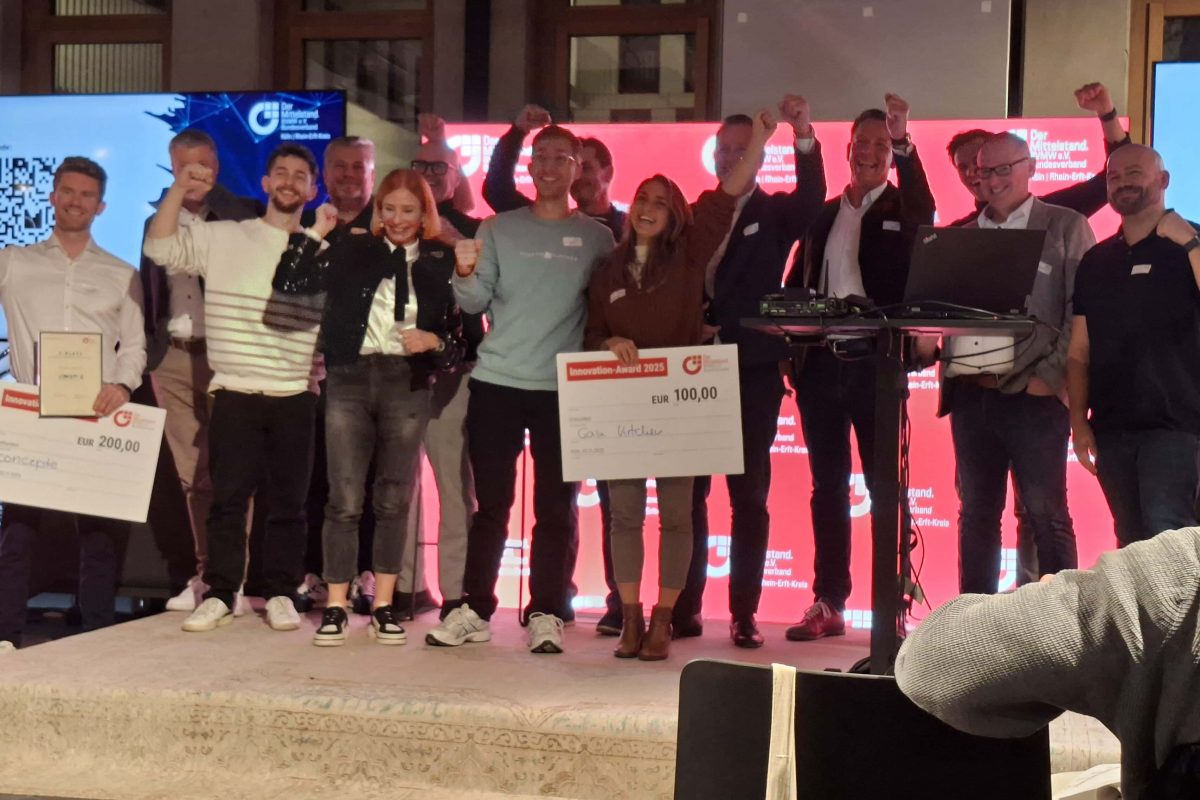
Recently, I attended a pitch competition organized by an entrepreneurs’ network in Cologne. Beyond the interesting content, I was particularly intrigued by the presence and performance of all speakers. While the innovation pitches presented there are not Science Pitches per se, I wanted to see how the ten short presentations of approximately eight minutes aligned with my ESPRIT model. ESPRIT stands for Expertise, Storyline, Performance, Relevance, Innovation, and Take Home Message. Below, I provide a condensed summary of my observations.
 Expertise: Combine Innovation and Personality
To be perceived as an expert, you need solid evidence. Concrete numbers help: cost savings, productivity improvements, and initial results. Some pitches also present a product roadmap, pricing, awards, and specific investment needs. Less advisable is repeatedly reading text from PowerPoint slides or index cards, sometimes even with the remark that it is “quite difficult”, which comes at the expense of the presumed expertise.
 Storyline: Guide Your Audience Through Your Presentation
Convincing pitches follow a clear structure: a recognizable problem, a precise solution, and concrete benefits are essential basics. Surprises as props or an interactive extension of the presentation (for example, an invitation to a coffee tasting) are door-openers. Compelling stories include turning points. Visions such as a “password-free future” or “customer communication on autopilot” set the tone, but they need practical examples to land. PowerPoint is standard, yet blurry screenshots, complex tables, or long quotations rarely add real insights.
 Performance: A Compelling Stage Presence
The way presentations are staged is important. Impactful pitch presenters maintain extended eye contact; they speak freely without reading, creating a direct audience connection. A counterexample: A speaker who juggles a handheld microphone, clicker, and laptop altogether – and fails. And the classic issue: A well-planned audio clip fails due to technical problems. Another speaker has a “Plan B” but introduces it too late, disrupting the flow. While most speakers stay on time, a few accelerate to double speed in the last minute to squeeze everything in. The conclusion: A convincing performance needs thorough preparation.
 Relevance: Who Needs Your Product – and Why?
Researchers often think in projects; SMEs also consider real consequences. A product sustains itself only when target groups are clearly identified and addressed. Strong pitches bridge the gap between current pain points (here: email overload, security risks, unnecessary doctor visits) and their solution (with statements about effort, costs, implementation, and impact). A clear call to action makes it tangible: scan a QR code, test the product during the break, or schedule a follow-up. The speaker of the winning pitch vividly demonstrates the global relevance of his topic.
 Innovation: Highlight the Unique Selling Proposition (USP)
“New” alone is not enough. Innovation convinces when it becomes a tangible advantage: saving time, reducing errors, improving security, or increasing visibility. Claims like “globally unique” or “more than ChatGPT” only work when backed by evidence. Successful examples include significantly reduced damage costs while improving cybersecurity (from € 30,000 to € 4,500), or highlight individually deployable AI agents that solve known data-processing problems and consolidate all channels on a single internal platform.
 Take Home Message: Condensing Your Headline into One Sentence
This is where many SMEs outperform researchers. Concise take home messages and slogans like “… because we always want to stay at the cutting edge”, “You can only protect yourself against AI with AI”, “Customer communication on autopilot”, or “Emergency practice in your pocket” / “Doc in the Pock” fit their topics and content well. An unexpected statement like “That is why we have a ‘shit business model’” (met with laughter) also works surprisingly well, demonstrating the Rhineland humor typical for Cologne.
 The Insight: Competence, Clarity, and Presence are Key to Success
What becomes clear once again that evening: Less is more! Less technology, more eye contact. Fewer facts, more practice-related storytelling. But please, not less preparation, rather more confidence on stage! PowerPoint slides should be understandable at a glance and limited to a single message.
In the concluding mini pitches, most adhere to the guideline of a maximum of two sentences; others exceed it, add new statements, or even ask their audience to vote for them. The most convincing speakers demonstrate competence, clarity, and presence: They clearly highlight the innovation they have developed and how they already apply it in practice for their customers.
And the ESPRIT model for Science Pitches? It can also be easily applied to small and medium-sized enterprises, even though the focus here is not on research projects but on products and services that are already available on the market.